
The artificial intelligence revolution is facing a harsh reality check. Across the United States and the globe, the unbridled expansion of AI and its massive data centers has ignited a fierce, multi-front backlash. From everyday citizens protesting energy-hungry tech campuses to workers filing lawsuits over algorithmic layoffs and compromised medical ethics, public sentiment has soured.
Yet, as opposition grows, a chilling counter-movement is emerging: federal intelligence agencies and local law enforcement are quietly classifying AI skeptics and community protesters as a new breed of domestic threat, dubbing them "anti-tech extremists."
Here is how the battle over the future of AI is unfolding across infrastructure, labor, civil liberties, and global security.
The Data Center Rebellion
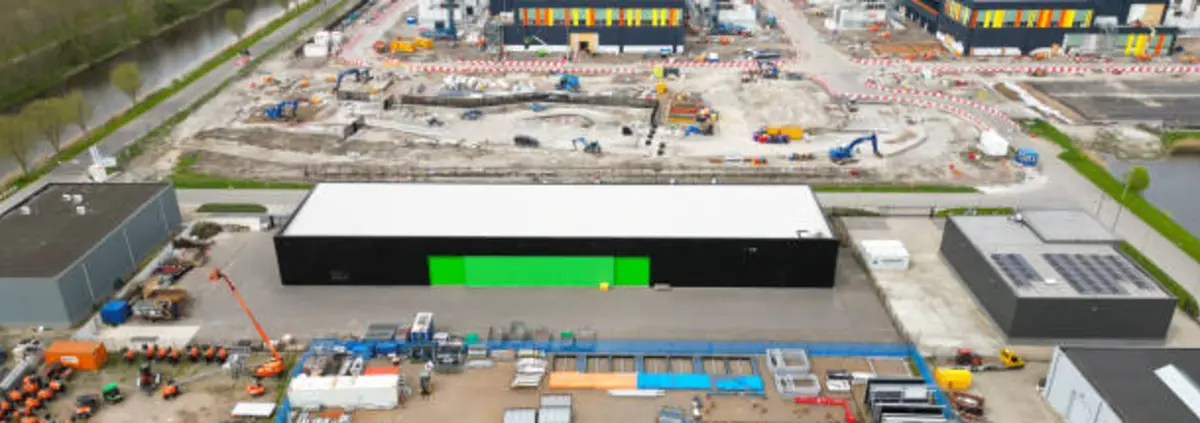
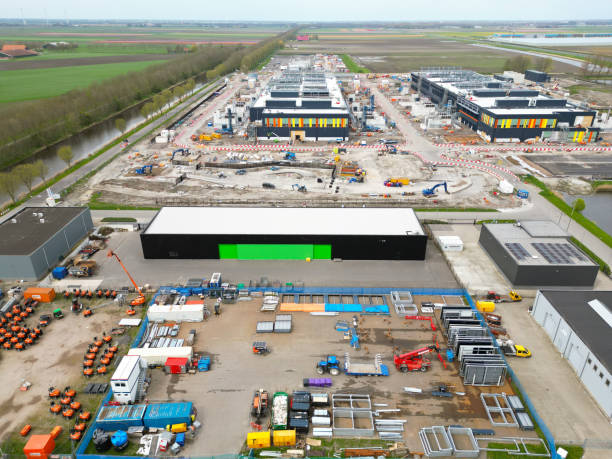
The physical footprint of AI is suddenly visible—and highly unpopular. Fueled by concerns over water scarcity, grid strain, and rising utility rates, grassroots opposition to data center construction has erupted in towns across the country.
- New York's Historic Moratorium: Governor Kathy Hochul recently signed the nation’s first state-level executive order pausing new data center construction over 50 megawatts, serving as a potential blueprint for other states.
- The Utah Mega-Campus Dispute: "Shark Tank" investor Kevin O’Leary has been forced to slash the footprint of his proposed "hyperscale" Stratos AI data center in Box Elder County from 40,000 acres down to 10,000 after intense political and public pushback. O'Leary has claimed that opponents were "professional protesters" bussed in from out of state, though local environmental advocates cite genuine fears over the draining of the Great Salt Lake.
- A National Trend: Over 300 bills related to data center regulation have been introduced in state legislatures this year alone, and federal lawmakers, including Senator Bernie Sanders, are pushing for a nationwide pause to evaluate the technology's environmental and economic toll.
The Rise of "Anti-Tech Extremism"
As citizens mobilize against data centers and AI job replacement, the U.S. government is quietly expanding its surveillance apparatus to monitor them. Documents obtained via public records requests reveal that the Department of Homeland Security, the FBI, and regional intelligence "fusion centers" are actively tracking what they call "anti-tech violent extremism."
This broad, novel categorization has civil rights advocates on edge. Intelligence reports have flagged constitutionally protected assemblies—such as local school board and town hall meetings where residents opposed data center zoning—as potential threat vectors. Open-source intelligence contractors like SITE are sweeping Discord servers and social media, while fusion centers circulate warnings about eco-extremists, anarchists, and even "Zizians"—followers of a fringe rationalist cult obsessed with the existential risks of AI.
Legal experts warn that this dragnet threatens to criminalize ordinary dissent, sweeping up peaceful data center protesters and AI skeptics under the guise of counterterrorism.
Labor Automation and Algorithmic Cruelty
The economic anxieties driving much of this backlash are far from hypothetical. In the U.S. alone, over 126,000 job losses have been linked directly to AI since January 2025.
Beyond straightforward job replacement, companies are facing legal reckoning for how they deploy AI in the workplace:
- Meta’s Algorithmic Layoffs: A bombshell lawsuit alleges that Meta used internal AI monitoring—tracking keystrokes, activity, and performance data—to select workers for an 8,000-person layoff. Because the AI allegedly failed to account for approved time off, the system disproportionately flagged workers who were on maternity leave or disability.
- Medical Corner-Cutting: A whistleblower lawsuit against the world-renowned Mayo Clinic claims the hospital system prioritized competitive speed over patient safety, alleging supervisors bypassed federal AI compliance rules, ignored a 67% error rate in a digital assistant tool, and rushed a high-risk cardiac AI device through approvals.
Even globally, governments are wrestling with the labor fallout. In a stark contrast to the U.S. approach, a Chinese court recently ruled that firing a worker to replace them with AI software is illegal, signaling Beijing's desire to balance its technological ambitions with social stability.
The Lethal Arms Race
Despite the domestic turmoil, defense and intelligence officials argue the U.S. cannot afford to pump the brakes. At a recent defense summit, CIA Director John Ratcliffe delivered a grim assessment of AI's military reality, noting that AI-powered drones in Ukraine have reduced the life expectancy of a Russian recruit to just 20 to 30 minutes.
Ratcliffe framed AI as the ultimate decider of future global power, explicitly warning that the U.S. is locked in an existential race with China across artificial intelligence, quantum computing, and scalable manufacturing. For the defense establishment, the prospect of ceding technological leadership to foreign adversaries eclipses domestic concerns over power grids and employment.
A Crisis of Public Trust
The tech industry finds itself at a dangerous crossroads: AI adoption is climbing, but public trust is collapsing.
Recent Pew Research polling reveals a stark paradox. While nearly half of American adults now use AI chatbots, only 16 percent believe AI will have a positive impact on society. Generation Z is the most conflicted demographic—they use AI the most (66%), but are also the most convinced (48%) that it will ultimately harm society.
The lack of trust is continually reinforced by institutional misuse, such as a recent investigation in Derbyshire, England, where a police officer was suspended for allegedly using generative AI to fabricate legal evidence.
As the technology becomes increasingly embedded in warfare, corporate HR, and local power grids, the friction between AI's architects and the public is only intensifying. The question is no longer whether AI will change the world, but whether society will tolerate the cost.
~Ben