
The Impostor's Premium: How Silicon Valley’s Disdain for Visionaries Built a $3 Trillion House of Cards
By replacing the "Great Man" with the "Great Consensus," the tech industry accidentally built an ecosystem perfectly calibrated to reward finance-bro mimics while ignoring the laws of financial gravity.
If you want to understand the exact moment the modern artificial intelligence boom detached itself from reality, look back to the spring of 2019.
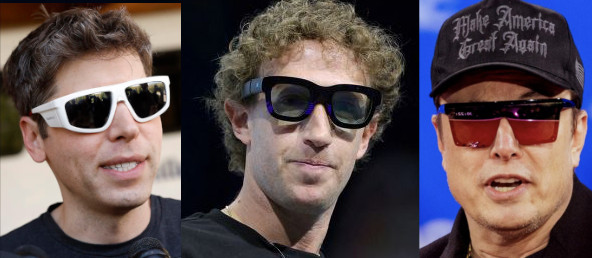
At a live event for StrictlyVC, technology journalist Connie Loizos posed a painfully basic question to Sam Altman regarding the unusually structured company he ran, OpenAI. She asked how, exactly, it planned to generate revenue. Was the aim to license technology? Customize algorithms for clients? “How is it going to work?” she asked.
Altman, with the serene, unblinking confidence of a prophet addressing his flock, offered a response that should have instantly evaporated his funding. “The honest answer is that we have no idea,” he replied. He elaborated that the company had made a “soft promise” to investors: once they built a generally intelligent system, they would simply ask the machine to figure out a way to generate a return on their investment.
He was telling a room full of the wealthiest, allegedly smartest financiers on earth to give him billions of dollars to build a machine, and if it worked, the machine would tell him how to pay them back.
Rather than laughing him off the stage, Silicon Valley threw a parade, handing Altman the keys to a kingdom that would eventually draw in Microsoft, spark a global arms race, and drive the entire technology sector toward a $3 trillion capital expenditure cliff.
We are currently watching the wealthiest corporations in human history—Microsoft, Meta, Alphabet, Oracle, and Amazon—borrow unprecedented sums of money to build infrastructure for a technology that possesses no underlying, sustainable business model. They are stockpiling hardware that physically degrades into obsolete “digital lettuce” within 36 months.
This is not a failure of technology. It is a failure of leadership. More specifically, it is the inevitable tragedy of a modern liberal technocracy that has structurally immunized itself against true visionaries, leaving the vault doors wide open for finance-bro impostors to cosplay as geniuses on borrowed money.
The Epistemic Vacuum
Modern institutionalism is fundamentally pluralistic, consensus-driven, and intensely anti-heroic. The prevailing historical framework of our era—echoing through universities, boardrooms, and venture capital firms—insists that individuals do not change history. Rather, systemic forces, demographic trends, and institutions change history. The 19th-century “Great Man Theory”—the idea advanced by Thomas Carlyle that exceptional individuals with singular vision pull humanity forward—is treated today as an outdated, dangerous, and mildly offensive myth.
Because the culture of capital has decided that individual genius is a systemic impossibility, it has built evaluation models that are structurally incapable of recognizing it.
Investors and corporate boards now evaluate leaders based entirely on systemic, frictionless metrics: academic pedigrees, the ability to synthesize the mood of the room, and the skill to manage existing forces without causing undue friction. They want a conductor to manage the orchestra, not a composer to write a new symphony.
The problem is that a true visionary is inherently disruptive. As the philosopher Arthur Schopenhauer noted, “Talent hits a target no one else can hit; Genius hits a target no one else can see.” Because the target is initially invisible to everyone else, true genius is illegible to a quarterly earnings spreadsheet. It is non-consensual.
To a system that values incrementalism and consensus above all else, true genius looks indistinguishable from madness or arrogance. When an actual visionary appears—someone who wishes to build a holistic, durable ecosystem of value rather than a quick-flip software patch—the system reacts with intense jealousy and spite. The visionary is scapegoated, tarred-and-feathered by the very institutions that desperately need their insight.
Because the gatekeepers of capital refuse to look for the invisible target, they exclusively fund the men willing to point at the most obvious, brute-force target available. Today, that target is simply: "Hoard as many GPUs as possible."

The Impostor's Exploit
A culture that refuses to tolerate a Walt Disney—an architect who builds interconnected, enduring ecosystems of value—creates a desperate market vacuum. The market still craves the results of a grand vision, even if the culture despises the visionary.
Enter the impostor: the highly leveraged executive who understands how to mimic the aesthetics of greatness without possessing a shred of the substance.
If you know that the gatekeepers of capital are ideologically opposed to evaluating the structural physics of your idea, you don't actually need to be a genius. You just need to be a masterful aggregator of hype.
Sam Altman is the patron saint of this systemic flaw. He did not invent the transformer architecture that powers ChatGPT; Google researchers did. He did not invent the core concepts of machine learning. Yet, he successfully exploited a room full of financiers terrified of missing out on the future. He realized that if he built a big enough pile of money, the market would mistake the pile of money for intellectual depth.
Elon Musk operates on a similar, highly leveraged archetype. He routinely buys out the foundational work of thousands of engineers, leverages massive amounts of capital, and uses a megaphone to retroactively claim the title of sole genius.
These men are not building a new world. They are acting as parasites on open-source ideas and foundational research, using other people's money to build a monopoly on the current one. They operate on the blind assumption that sheer computing power will magically invent its own business model before the debt comes due.
Bonhoeffer in the Boardroom
How do the smartest people in the world fall for this? How do Meta and Oracle commit to tens of billions in data center leases without a clear path to profitability?
Dietrich Bonhoeffer’s theory of stupidity provides the cleanest answer. Writing from a Nazi prison, the theologian argued that stupidity is not a defect of intellect, but a sociological flaw where people surrender their critical faculties to a collective momentum. When faced with overwhelming external pressure, individuals lose their independent relationship to reality.
The hyperscaler boardrooms are currently filled with Ivy League financiers exhibiting extreme collective stupidity. It is a fatal intersection of Bonhoeffer's theory and the Dunning-Kruger effect.
Because these companies won the software wars of the 2010s—a game defined by zero marginal costs and infinite digital distribution—they assume they are equally invincible in the heavy-infrastructure utility wars of the 2020s. They believe they are still playing software, but they are actually playing a game of physical constraints, energy grids, supply-chain bottlenecks, and massive, unforgiving debt schedules.
Questioning the AI hype cycle right now makes an executive a pariah. It is professionally safer for a CFO to sign a $50 billion data center lease and fail with the herd than to step outside the consensus, demand a viable business model, and risk being wrong alone.
The Inevitable Reckoning
We are rapidly approaching the moment where reality reasserts itself. You cannot build a Disney-scale empire using a Musk-scale business model.
True genius uses technology to build proprietary, durable assets that hold their value long after the initial hardware degrades. The impostor simply rents out raw compute, praying that an algorithm will eventually invent a business model before the corporate bonds mature.
When the options contracts expire and the hardware refresh cycle hits in late 2026 and 2027, the market will finally discover the exact price of mistaking a well-funded mimic for a Great Man. The tragedy is that the culture's allergy to true visionaries didn't protect us from dangerous men; it merely ensured that the dangerous men we elevated were also frauds.
Case Study: Mark Zuckerberg and the Tragedy of Brute Force
Examining Zuckerberg as the ultimate proof of what happens when absolute structural power meets a complete lack of visionary genius.
If Sam Altman represents the impostor who manipulated his way into the role of the visionary, Mark Zuckerberg serves as an entirely different, perhaps more tragic case study: the man who possesses the absolute, unassailable power of a Great Man, yet fundamentally lacks the genius to wield it.
Structurally, Zuckerberg is an anomaly in the modern tech ecosystem. Thanks to Meta’s dual-class share structure, he cannot be fired. He does not have to bend to the whims of a cautious board of directors or appease the risk-averse consensus of venture capital. He is fully insulated from the epistemic vacuum that traps his peers. In theory, he has the exact runway required to be a Walt Disney—to ignore the noise, look at the invisible target, and build a multi-generational, integrated ecosystem.
Instead, he has provided a masterclass in the Dunning-Kruger effect, proving that when a software billionaire confuses a zero-marginal-cost social network with actual visionary foresight, the result is catastrophic capital destruction.
We first saw this with the Metaverse. Zuckerberg believed that by simply renaming his company and burning tens of billions of dollars on virtual reality headsets, he could force a new reality into existence. He treated vision as something that could be purchased via brute-force capital expenditure. When the market rejected the Metaverse, rather than retreating to devise a truly original paradigm, Zuckerberg immediately succumbed to Bonhoeffer’s herd mentality. He pivoted Meta’s entire corporate identity overnight to chase the exact same generative AI consensus as everyone else.
Despite having the power to stand alone, Zuckerberg surrendered his intellect to the collective momentum of Silicon Valley.
The financial mechanics of this surrender are staggering. Meta is on track to spend up to $145 billion on AI infrastructure in 2026 alone. Because the cash flow from Instagram and Facebook ads is no longer sufficient to feed this inferno, Zuckerberg has quietly transformed his company from a pristine software business into a heavily leveraged infrastructure utility. He went to the bond market to raise $25 billion to buy GPUs—hardware that will be effectively obsolete in three years. Financial analysts now project that by 2027, Meta will plunge into negative free cash flow, spending more money to power and replace its AI data centers than its entire global advertising empire generates in profit.
Zuckerberg perfectly illustrates the core crisis of the impostor era. He is desperately trying to build a castle, but he lacks the architectural genius of a Disney. So, he just keeps buying bricks. He is hoarding compute, building $50 billion data centers in Louisiana, and openly exploring the idea of renting out his excess server capacity just to help service the debt.
He is the ultimate proof of Schopenhauer’s maxim. He has unlimited arrows and the strongest bow in human history, but because he cannot actually see the target, he is simply firing billions of dollars into the dark, praying he eventually hits a business model.

The Capitalist Paradox: Demanding the Role, Denying the Talent
But why do we hate great men?
There is a glaring paradox at the heart of this technocratic allergy to genius: If modern institutions so thoroughly reject the "Great Man," why does late-stage capitalism continually produce these messianic, singular figureheads? If the culture truly believes in the supremacy of decentralized systems and consensus, why do we keep handing the keys to the global economy to individuals like Altman and Musk?
The answer lies in the harsh mechanics of corporate hierarchy and the nature of modern capital. The system structurally demands the role of a Great Man, even as its gatekeepers actively deny the talent.
Markets are fueled by narrative, and narrative requires a protagonist. You cannot pitch a massive, abstract, multi-billion-dollar infrastructure buildout to a Saudi sovereign wealth fund or a retail investor by presenting them with a decentralized committee of mid-level engineers. Capital requires a focal point. It needs a high priest to stand at the altar of the future and assure the congregation that the trillion-dollar sacrifices will eventually yield miracles.
Furthermore, the corporate pyramid is structurally inescapable. No matter how much lip service Silicon Valley pays to flat organizations and pluralistic decision-making, capitalism requires an apex. It requires a singular entity to absorb the legal liability, ring the opening bell, and serve as the vessel for the brand's mythology.
This creates a profound tension: the machinery of capital desperately needs a visionary figurehead to attract liquidity, but the risk-averse institutions managing that capital are terrified of actual visionaries. A true genius—someone who sees the invisible target and is willing to break the existing paradigm to hit it—is fundamentally dangerous to the established financial order. A Walt Disney builds a new world that renders the old one obsolete. To a venture capital firm looking for a clean, three-year exit, that level of disruption is a liability.
The tech-bro impostor is the market’s perfect, cynical compromise. He resolves the paradox.
He is elevated because he is willing to wear the costume of the Great Man—the dramatic pronouncements, the casual wardrobe, the illusion of carrying the future of humanity on his shoulders—while possessing the soul of an asset manager. He serves the systemic demand for a messiah without posing any actual threat to the underlying financial consensus. He will not disrupt the flow of capital; he will merely accelerate it.
We elevate the finance-bro precisely because he is not a Great Man. He is a perfectly calibrated mirror, reflecting the market’s own greed back at it, disguised as innovation. The system crowns him not for his ability to invent the future, but for his willingness to play the leading man in a trillion-dollar play where the script has already been written by the bond market.
