

The corporation doesn't just want to brand our minds. It wants to own the earth. To understand the modern tech monopoly, we have to look past the 1990s and return to the original Empire Builders.
It has been more than a quarter-century since Naomi Klein published No Logo, a book that arrived in December 1999 with the timing of a thunderclap. The late nineties were a strange, liminal era. The Cold War was over, the dot-com bubble was inflating with irrational exuberance, and political scientists were confidently declaring the "End of History."
The prevailing wisdom in Washington and Davos was that liberal democracy, permanently married to frictionless free-market capitalism, had triumphed. The End of History and the Last Man. Immanentization of the Eschaton.
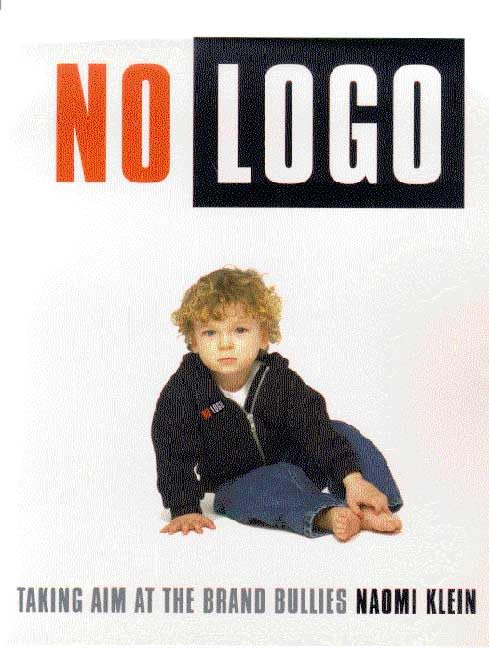
Yet, on the streets of Seattle during the World Trade Organization protests, a very different narrative was boiling over in clouds of tear gas. No Logo became the definitive manifesto of that alter-globalization movement because it articulated a creeping, collective dread. Klein diagnosed a profound mutation in capitalism: the realization that the world’s most powerful multinational corporations had stopped manufacturing physical products and had instead begun manufacturing culture.
Brands like Nike, Apple, Tommy Hilfiger, and Starbucks weren’t merely selling sneakers, computers, or coffee. They were orchestrating a psychic annexation of public space. They were co-opting youth rebellion, turning anti-establishment aesthetics into premium lifestyle brands, all while hiding brutal, sweatshop-driven global supply chains behind glossy, progressive marketing campaigns. The modern corporation, Klein warned, was moving from the factory floor to the space inside our heads.
Today, in 2026, reading No Logo is a dizzying experience. The book is astonishingly prescient in its understanding of the hollowed-out global supply chain, yet it feels heartbreakingly quaint in its assessment of the ultimate threat.
The Empire Builders
The corporate overreach Klein documented in 1999 has not merely metastasized; it has transcended the concept of the "brand" entirely. Today’s monopolies no longer care about plastering their logos on our public squares because they have quietly purchased the underlying infrastructure of our daily lives. Amazon Web Services doesn't need a billboard; it hosts the internet. BlackRock doesn't need a catchy jingle; it owns the real estate. SpaceX doesn't need to co-opt youth culture; it controls low-Earth orbit. We are no longer dealing with lifestyle brands trying to sell us an image. We are dealing with sovereign entities.
If No Logo diagnosed the psychological symptoms of consumer capitalism at the turn of the millennium, understanding our current dystopian reality requires a much deeper historical exhumation. To understand the algorithmic tyranny of Silicon Valley, the creeping privatization of modern warfare, or the stateless power of global asset managers, we cannot look to the boardroom excesses of the 1990s. We have to look four hundred years further back.
We have to look at the original Empire Builders.
The Ledger as a Weapon of Mass Destruction
Before multinational corporations hired K Street lobbyists and corporate communications teams, they deployed navies. If we want to understand the modern blueprint for corporate overreach, we must begin with the British East India Trading Company (EIC), an entity that shatters the enduring capitalist fairy tale that modern wealth was built on peaceful, frictionless trade.
The East India Trading Company
Founded in 1600, the EIC was the original military-corporate complex. It was a joint-stock venture that did not merely exploit foreign markets, but became a sovereign, globe-spanning state in its own right. At its peak, the Company commanded a private army of a quarter-million soldiers—twice the size of the British army—and functioned as the ultimate proof of concept for the privatization of global sovereignty.
We often talk about the "algorithmic cruelty" of modern tech giants—the way Amazon’s fulfillment center software fires workers automatically, or the way social media algorithms radicalize populations for engagement. But the EIC invented algorithmic cruelty centuries before the microchip. In eighteenth-century Bengal, the EIC’s relentless agricultural extraction and taxation policies were rationalized to the point of famine.
During the Great Bengal Famine of 1770, an estimated ten million people—nearly a third of the region's population—starved to death. Yet, this apocalypse was not a failure of the EIC’s systems; it was the system working exactly as designed. The EIC’s bureaucracy turned localized droughts into a mass-extinction event simply to maintain its quarterly dividend payouts for shareholders in London. The separation of moral liability from financial reward—the core feature of the limited liability corporation—allowed men sitting in English drawing rooms to orchestrate mass death without ever having to look it in the eye.
Perhaps the most chilling parallel to our modern era is the EIC’s 1773 bailout. Facing bankruptcy due to its own grotesque mismanagement, corruption, and greed, the corporation turned to the state. The British government intervened, bailing out the EIC by passing the Tea Act, effectively forcing the Company's surplus tea onto the American colonies. It sparked the American Revolution, yes, but more insidiously, it cemented the fundamental doctrine of late-stage capitalism: privatize the profits, and socialize the losses. The "Too Big to Fail" logic that saved Wall Street in 2008 and 2020 was forged on the docks of the eighteenth century.
Monopolizing the Map
If the EIC conquered through overt military force and artillery, the Hudson’s Bay Company (HBC) conquered through spatial monopoly, ecological devastation, and the enforcement of absolute economic dependency.
The Hudson's Bay Company
In 1670, King Charles II executed a breathtaking act of geopolitical hubris: with the stroke of a quill, he gifted a private company absolute ownership over "Rupert’s Land"—a watershed encompassing roughly a third of modern-day Canada, an area of 1.5 million square miles. Now know as Hudson Bay, it shares it's name with another such proto-multinational: The Hudson's Bay Company: HBC. The sheer audacity of this spatial monopoly remains staggering. A boardroom of European aristocrats claimed private ownership of a landmass larger than Western Europe, ignoring the hundreds of Indigenous nations who had lived there for millennia.
The HBC did not build cities; they built a continental-scale company town. In doing so, they pioneered the commodification of nature itself. They treated the beaver not as a living creature embedded in a complex ecosystem, but as a unit of currency, systematically transforming a keystone species into a fleeting fashion trend for European gentlemen.
When rival American trappers began encroaching on their territory in the 19th century, the HBC didn't just compete on price. They instituted a "scorched earth" trapping policy along the border regions, ordering their trappers to hunt every fur-bearing animal to absolute extinction. They deliberately created sprawling ecological dead zones so that any rival venturing into the territory would starve. It was the invention of environmental destruction as a legitimate barrier to market entry.
More devastatingly, the HBC systematically dismantled self-sustaining Indigenous economies. They replaced centuries of ecological stewardship and localized trade with a strict system of debt-peonage tied exclusively to the global fur market. The HBC controlled the trading posts, set the prices for both the pelts and the essential survival goods they sold back, and ensured that the Indigenous trappers were always operating at a deficit. It was a closed-loop ecosystem of exploitation that mirrors the "walled gardens" of modern tech monopolies, where the platform controls both the marketplace and the terms of survival.
And when the fur market finally waned, the HBC executed the ultimate corporate pivot. They didn’t go bankrupt; they cashed out. In 1869, via the Deed of Surrender, a private corporation sold millions of square miles of stolen Indigenous land directly to the newly formed Canadian government. They established the legal and moral template for every corporate land grab and resource extraction project that has followed since.
The North American Sable nearly went extinct as a direct result of the Hudson's Bay Corporation. All so that rich / aspirational white women could wear stylish coats.
The Philanthropic Facade and the Quota
Perhaps the most haunting of these original Empire Builders is the reign of King Leopold II over the Congo via his network of concessionary companies, most notably the Anglo-Belgian India Rubber (ABIR) Company. If one wants to understand the dark arts of modern corporate greenwashing, ESG (Environmental, Social, and Governance) manipulation, or the weaponization of billionaire philanthropy, Leopold is the dark patron saint of the practice.
Anglo-Belgian India Rubber Company
Leopold did not initially claim the Congo through royal, state-sponsored conquest. He claimed it under the guise of an international NGO—the Association Internationale Africaine. Using the lofty language of "civilization," and promising to bring free trade while abolishing Arab slave routes, Leopold secured the blessing of the United States and European powers at the 1884 Berlin Conference. He promised a humanitarian utopia.
Once the humanitarian facade had served its purpose, the NGO immediately morphed into a ruthless, for-profit extraction machine. The Congo Free State became the world's first wholly privatized nation, a massive, continental slave-labor camp existing solely to feed the industrialized West's insatiable new hunger for pneumatic tires, electrical insulation, and industrial rubber.
It is here that the modern mechanics of corporate quotas reveal their most terrifying extremes. ABIR and other concessionary companies utilized a mercenary force, the Force Publique, to ensure local villages met impossible rubber harvesting quotas. Because bullets were imported from Europe and strictly accounted for, corporate managers required the mercenaries to prove they had not wasted company ammunition on hunting or mutinies. For every bullet fired, they had to return with a severed right hand.
The forced amputations of millions of Congolese workers were not merely acts of chaotic, colonial sadism. The severed hands were a ledger entry. They were a highly organized auditing mechanism utilized to enforce productivity. This was an extreme, blood-soaked form of Frederick Winslow Taylor’s scientific management theory.
Yet, it is also in the Congo that we see the birth of modern anti-corporate resistance. A British shipping clerk named E.D. Morel noticed a discrepancy at the docks of Antwerp: ships were arriving from the Congo filled with immensely valuable rubber, but they were departing loaded only with guns and chains. Realizing that no actual trade was occurring—only slavery—Morel partnered with missionaries like Alice Seeley Harris, who used early portable cameras to photograph the atrocities. Together, they launched what was effectively the first modern, international human rights boycott against a corporate entity, ultimately forcing Leopold to relinquish his private hold on the country to the Belgian state in 1908.
The Architecture of Our Present
When Naomi Klein wrote No Logo, she was warning us about a corporate culture that wanted to consume our identities. It was a vital, generation-defining warning. It taught us how to read the semiotics of the billboard, the swoosh, and the storefront.
But looking back from the vantage point of the late 2020s, it is clear that the corporatization of the self was merely a late-stage luxury—a distraction from a much older, much darker project. The megacorporation was never truly about branding; it was about the usurpation of sovereign power.
The DNA of the East India Company, the Hudson’s Bay Company, and the ABIR Congo Company lives on today. It pulses through the veins of tech monopolies that bypass democratic governments to dictate the terms of global speech. It is present in private military contractors that externalize the moral and financial costs of endless war. It thrives in the algorithms of asset management firms that buy up single-family homes under the banner of market efficiency, creating a modern form of debt-peonage.
These entities no longer need to field their own wooden galleons, nor do they need to claim physical continents with flags. They have claimed our digital infrastructure, our genetic patents, and our public utilities. And just like Leopold in the Congo, they still use the language of "progress," "sustainability," and "global connectivity" to mask unrelenting extraction.
Revisiting No Logo today requires us to acknowledge that the era of the Brand has given way to the return of the Empire Builders. We must stop viewing these modern behemoths as inevitable forces of nature or natural triumphs of innovation. They are, and have always been, political institutions engineered to extract wealth through structural violence and monopoly. And if this architecture of power was legally constructed centuries ago through charters and contracts, we must remember that it can—and must—be legally dismantled.
~Ben