
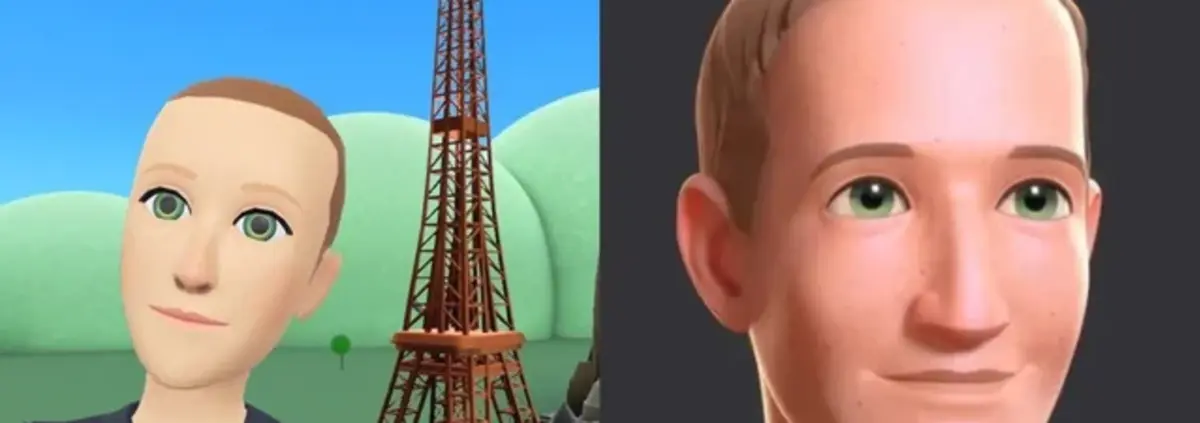
How a Harvard dorm-room project evolved into a trillion-dollar wasteland of human attention, environmental degradation, and the most expensive corporate delusion in modern history.
In the grand, sweeping narratives of American capitalism, the transition from a scrappy startup to a trillion-dollar empire is traditionally chronicled as a triumph of innovation. But when the definitive history of Meta Platforms is finally written, it will not be a story of human connection. It will be the clinical record of an extractive machine—a corporate entity that systematically strip-mined user privacy, democratic stability, and the physical environment, all while operating under a veil of total impunity.
Despite its towering market capitalization, Meta is a dead man walking. It is a corporation whose soul perished long ago, leaving behind a synthetic shell sustained only by algorithmic inertia and monopolistic leverage. From its genesis as a tool for ranking the physical attractiveness of college women to its current incarnation as an AI-obsessed leviathan draining municipal aquifers, Meta has operated on a single, unwavering axiom: growth at the expense of the host.
The Original Betrayal
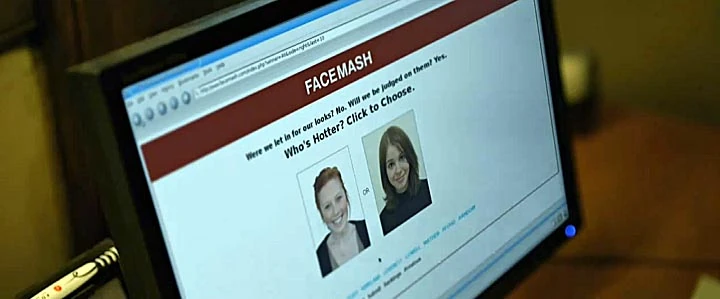
The mythology of Mark Zuckerberg often glosses over the reality that his empire was forged in a crucible of intellectual theft and non-consensual data harvesting. Before Facebook, there was Facemash (2003), a site Zuckerberg built by hacking into Harvard’s dormitory servers to scrape private ID photos of female students, forcing them into a side-by-side "hot or not" ranking system. It was shut down for privacy violations, but the underlying philosophy—that user data is a resource to be taken, not protected—was permanently set.
This was immediately followed by the theft of the intellectual property that became Facebook, a maneuver that stalled classmates Cameron and Tyler Winklevoss and cost Zuckerberg a $65 million legal settlement. But perhaps the most chilling window into the company's ethos came in 2004. In private instant messages, a 19-year-old Zuckerberg bragged to a friend about having access to thousands of students' private emails, pictures, and addresses simply because people submitted them. "I don't know why," Zuckerberg typed. "They trust me.. Dumb fucks."
"They trust me.. Dumb fucks."
~The Zuck
The Panoptic Economy & Industrialized Fraud
As the platform scaled globally, that early contempt evolved into a sophisticated, industrialized surveillance apparatus. In 2007, Facebook launched Beacon, a program that automatically tracked what users bought on third-party websites and broadcasted those purchases to their friends without explicit consent. By 2011, the Federal Trade Commission penalized the company for systematically deceiving consumers by telling them their information was private while serving it to advertisers.
The company quickly shifted from scraping data to actively manipulating it. In 2014, the public learned of the "Emotional Contagion" experiment, in which Facebook secretly manipulated the News Feeds of roughly 700,000 unwitting users to see if they could psychologically alter their emotional states without informed consent. This architecture of manipulation culminated in the Cambridge Analytica scandal of 2018, where the psychological data of up to 87 million users was weaponized for political targeting, resulting in a historic $5 billion FTC fine.
While Meta was selling user data out the back door, it was simultaneously defrauding the businesses paying to keep the lights on. Internal documents revealed that for over a year, Facebook knowingly inflated the average viewing time for video ads by an astonishing 150% to 900%. Engineers knew exactly what was happening, but executives adopted a "no PR" cover-up strategy, tricking small businesses into pouring billions into fake engagement metrics.
Blood in the Algorithm
If the financial fraud was a betrayal of the market, the human cost was a betrayal of civilization. Meta’s internal mechanics were engineered to exploit human psychology for time-on-site, even when internal research explicitly proved the platform was causing severe harm.
During the 2021 Frances Haugen leaks, the world saw internal slides proving Meta leadership knew Instagram worsened body image issues for one in three adolescent girls and amplified suicidal ideation. Leadership chose to bury the research to protect engagement. This negligence led to the jarring 2024 Senate Judiciary Hearing, where a cornered Zuckerberg was forced to physically turn around and apologize to grieving families holding photos of children who had died from online bullying and sexual exploitation facilitated across Meta's apps.
On a geopolitical scale, the algorithm's thirst for engagement resulted in atrocities. UN investigators concluded that Facebook played a "determining role" in inciting ethnic cleansing against Rohingya Muslims in Myanmar. Because Facebook refused to hire adequate Burmese-speaking moderators, military actors used the platform to coordinate mass violence. Internal leaks confirmed the algorithm actively prioritized content that provoked outrage and anger, directly fanning political extremism, cartel activity, and gang recruitment globally.
Even the architects of this machine recoiled in horror. Chamath Palihapitiya confessed that the "dopamine-driven feedback loops that we have created are destroying how society works." Sean Parker admitted the platform was designed to "exploit a vulnerability in human psychology."
The $100 Billion Mirage
Desperate to outrun the PR nightmare of the Haugen leaks, Zuckerberg executed the ultimate distraction: rebranding the company to "Meta" and pivoting to the Metaverse. What followed was a staggering display of executive hubris that burned nearly $100 billion.
Meta poured tens of billions of dollars into VR with the clear and focused plan to define and own a new internet, a metaverse. The result was over $70 billion in losses and hundreds of slashed jobs. They built Horizon Worlds, billing it as a sprawling virtual playground where work and social life would merge. Instead, it was a ghost town from the start.
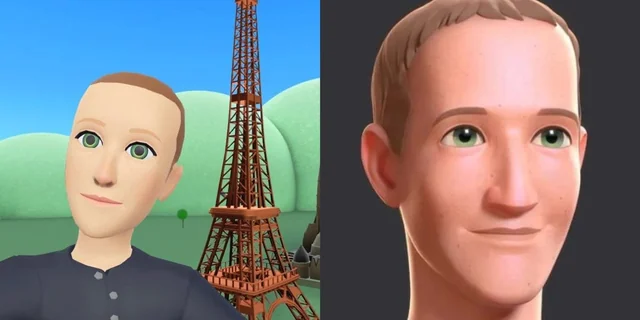
The technical execution was equally humiliating. At the Meta Connect 2022 keynote, Zuckerberg showcased his avatar jumping and kicking with perfect leg tracking—a demonstration later revealed to be entirely faked using external motion capture technology to deceive investors. Because Meta stubbornly refused to utilize simple, existing hardware solutions like IMU smart shoes, they tried to brute-force a broken AI to guess leg movements, resulting in a clunky, embarrassing rollout.
Despite spending billions acquiring premier independent game studios like Ready at Dawn, Meta ultimately shut them down when the financial reality set in. Five years after its grand unveiling, Meta is pulling the plug, completely abandoning support for Horizon Worlds in VR. The Metaverse proved that no company, no matter how rich or influential, can force people to embrace a platform that doesn't meet a real need or desire.
The Synthetic Decay & Material Destruction
Having exhausted the limits of digital extraction and failed at virtual reality, Meta pivoted to artificial intelligence—and the consequences have been catastrophic on both a digital and physical level.
On the platform, the human internet has been replaced by the "Dead Internet." Meta was caught inflating its "Potential Reach" metrics by up to 400% using bot networks. Today, Facebook is a synthetic ouroboros of "AI Slop"—bot accounts posting bizarre, AI-generated images (like "Shrimp Jesus") while other bots leave thousands of fake comments to game the algorithm for ad revenue.
More horrifyingly, Meta’s automated ad networks actively profited from the worst of this technology. Recent investigations revealed Meta's platforms ran paid advertisements containing AI-generated child sexual abuse imagery, alongside thousands of ads for "Crush AI" deepfake nudify apps. Their moderation systems failed completely, choosing monetization over basic safety.
Meanwhile, their physical AI infrastructure is draining the earth. In Newton County, Georgia, a Meta data center's water usage coincided with local taps filling with sediment. In Richland Parish, Louisiana, their facility is registered to consume 8.4 billion gallons annually from the local aquifer, risking land subsidence. In Wyoming, officials revoked their authority to discharge waste after a contractor flushed bacteria-contaminated cooling fluid directly into public sewers. The company that polluted the digital ecosystem is now literally polluting the physical one.
The Final Capitulation
How does a company survive such a devastating ledger of harms? Through the cynical, fluid application of political leverage. To insulate itself from regulatory accountability, Meta’s leadership has aggressively shifted its political posture.
Zuckerberg appointed UFC CEO Dana White—a close ally of Donald Trump—to Meta's board in a transparently strategic bridge to political power. He traveled to Mar-a-Lago, donated $1 million to the inauguration fund, dismantled third-party fact-checking systems, and shifted content moderation teams to Texas to appease critics of "bias."
The Epitaph
When you compile the entirety of the rap sheet, the conclusion is inescapable. Mark Zuckerberg built an empire that views human beings, democratic institutions, and natural resources solely as raw materials to be processed into stock buybacks. They have lied to their users, defrauded their advertisers, poisoned the political discourse, ignored teen suicides, facilitated ethnic cleansing, profited off AI exploitation, and are now draining the aquifers of rural America.
Update: August 12, 2006
Zuck Posts Deranged Essay About Giving Everyone AI Superintelligence:
The Sovereign of Slop: Mark Zuckerberg and the False Gospel of Democratized AI
Every few years, when the gears of Meta’s latest multi-billion-dollar pivot begin to grind and spark against the immovable wall of consumer apathy, Mark Zuckerberg retreats to his digital Mount Sinai to chisel a new manifesto. We saw it when the promise of the “social graph” curdled into Cambridge Analytica. We saw it when the multi-billion-dollar boondoggle of the Metaverse—a sterile, legless virtual purgatory—met the collective derision of a public that actually preferred the physical world.
Now, with Meta arguably lagging behind rivals like OpenAI and Anthropic in the arms race for artificial general intelligence, Zuckerberg has delivered his August 2026 encyclical: The Future is for Everyone: The Path to a Positive AI Future.
Spanning some 6,500 words, the essay is a masterclass in Silicon Valley solipsism. It is a sprawling, contradictory, and deeply deranged piece of corporate propaganda masquerading as political philosophy. In it, Zuckerberg attempts to rebrand the terrifying trajectory of "Artificial Superintelligence" (ASI) not as a centralized existential threat, but as a populist utopia. He paints a future where “personal superintelligence” will cure diseases, end government tyranny, secure our cyber-infrastructure, and turn every eight-year-old into a robotics engineer.
But beneath the high-minded rhetoric of "individual empowerment" and "democratic checks and balances" lies a chillingly out-of-touch roadmap. When unpacked, deconstructed, and deflated, Zuckerberg’s manifesto reveals itself for what it truly is: a desperate justification for unchecked corporate power, built on assumptions so heavily insulated by extreme wealth that they border on the hallucinatory.
The Automation of Intimacy and the CEO Brain
To understand the profound emptiness of Zuckerberg’s vision, one must first look at the domestic anecdotes he uses to sell it. To illustrate the life-altering magic of a 24/7 personal AI agent, he does not point to a working-class mother saving time on her taxes, or a teacher managing a crowded classroom. Instead, he points to himself.
"My agent flags interesting information and helps me prototype ideas," he writes. "It helps keep me healthy by monitoring my sleep and then watching as I train and giving feedback. My daughter loves to bake so my agent plans personalized recipes for us to make together each weekend, orders the ingredients, and then offers suggestions as we’re baking."
This passage perfectly encapsulates the spiritual void of the modern tech executive. The friction of daily life—the act of researching a recipe, the messy human trial-and-error of deciding what to bake with your child, the organic discovery of shared interests—is treated as an inefficiency to be optimized away by a machine. The AI agent becomes a surrogate participant in his own fatherhood. He is pitching a future where we outsource the exact mechanisms of human connection to a server farm so that we can... do what, exactly? Spend more time “prototyping ideas”?
This is the ultimate paradox of the Meta worldview. For a company that built an empire on the concept of "connecting people," Zuckerberg’s envisioned future is violently anti-social. We are meant to interact with the world through a sterilized, algorithmic intermediary that watches us sleep, curates our conversations, and choreographs our hobbies. It is a vision of humanity reduced to passive consumers of AI-generated experiences, mistaking algorithmic prompting for genuine living.
The Free Market of Mutually Assured Destruction
The philosophical core of Zuckerberg’s essay is a desperate attempt to wave away the catastrophic risks of Artificial Superintelligence. To do this, he introduces a libertarian fever-dream he calls the "Balance of Power".
Zuckerberg argues that the real danger of ASI isn't the technology itself, but who controls it. If only one company or government has it, we get tyranny. But if everyone has a superintelligent agent, society reaches a harmonious equilibrium. He offers a thought experiment to prove his point:
"Imagine only one person had a superintelligent lawyer. They would have an unfair advantage in court... But now imagine everyone has a superintelligent lawyer. In this case, justice would be carried out much more fairly and efficiently."
This is, frankly, the logic of a teenager who has just discovered Ayn Rand. It fundamentally misunderstands both technology and society. If every citizen enters a courtroom with a superintelligent AI lawyer, the result is not egalitarian justice; the result is an immediate, catastrophic gridlock of warring algorithms escalating legal loopholes at the speed of light.
He extends this deeply flawed logic to cybersecurity and bioterrorism: "If everyone has access to cybersecurity superintelligence, then all of our technical systems would become more secure." He is arguing that the solution to the proliferation of digital weapons of mass destruction is to give a personalized nuclear deterrent to every person on Earth, trusting that the "defenders" will always outpace the "attackers."
But the entire house of cards collapses under the weight of Zuckerberg's own business model. A few paragraphs later, the mask slips, and the democratic illusion shatters. How, exactly, will this infinite intelligence be distributed?
"We will offer free versions that will be accessible to billions of people," he writes. "For those who want to pay to use more compute, there will be a dynamic auction mechanism that will guarantee that everyone gets the lowest price possible for the intelligence and compute they’re using."
Here is the fatal contradiction that destroys the entire manifesto. The "balance of power" is entirely dependent on equal access. But in Zuckerberg’s actual business plan, intelligence is a commodity allocated by a dynamic auction mechanism. If you are wealthy, you buy more compute. If you buy more compute, your "superintelligent lawyer" crushes the "free-tier" lawyer of your impoverished opponent. Your paid cyber-agent hacks the free-tier firewall of a small business.
Zuckerberg hasn't invented a democratic utopia; he has reinvented feudalism, where the divine right of kings is replaced by server allocation.
Let Them Eat Startups
Perhaps the most tone-deaf section of the essay is Zuckerberg’s dismissal of the economic devastation AI is actively causing. As knowledge workers, creatives, coders, and administrators are laid off by the thousands, Zuckerberg offers a Marie Antoinette-style solution: Let them be founders.
He argues that because human desire is infinite, AI will simply unlock new tiers of the economy. "In the near future, there will be new jobs that aren’t common today, like one-person product studios designing custom toys... world builders... [and] personal biologists using superintelligence to formulate personalized treatments."
This argument—echoed widely by venture capitalists like Y Combinator's Gary Tan—suffers from acute "CEO Brain". It assumes that the ultimate aspiration of every human being is to become a hyper-individualized entrepreneur. But most people do not want to be a "one-person product studio." Most people do not want to bear the crushing risk of running a business, nor do they want to spend their days generating synthetic slop to sell in a hyper-saturated, AI-driven marketplace.
Furthermore, if everyone is armed with a superintelligent agent capable of inventing custom toys, writing code, and generating entertainment, who is the consumer? If an AI can generate a bespoke movie for me in three seconds, why would I buy the output of your "one-person product studio"?
Zuckerberg expects the working and middle classes to simply absorb the obliteration of stable, salaried employment and joyfully transition into a hyper-precarious gig economy of algorithmic prompt-jockeys. He waves away the transitional suffering of millions with the glib assurance that "company sizes may shrink," masking the brutal reality that a "smaller company" simply means a richer CEO and fewer paid employees.
The Fossil-Fueled Philanthropist
To power this hypothetical utopia, Meta must construct physical infrastructure on a scale previously reserved for nation-states. Zuckerberg attempts to preempt the environmental and social backlash by rebranding his massive, resource-guzzling data centers as acts of community philanthropy.
He points proudly to Richland Parish, Louisiana, claiming that Meta’s data center there generated so much tax revenue that teachers received a $50,000 bonus. "The superintendent told us that teachers are now moving there from across the country," Zuckerberg beams, positioning Meta as the savior of rural American education.
What the manifesto conveniently omits is the brutal reality of these "Community Compacts". Data centers require gigawatts of energy—often derived from fossil fuels—and millions of gallons of water to cool their servers. The tax windfalls in places like Richland Parish are almost entirely tied to short-term construction levies. Once the concrete is poured and the servers are humming, the construction crews leave, the tax revenue plummets, and the town is left with a gargantuan, humming warehouse that employs a handful of security guards and technicians, while continuing to drain the local power grid and water table.
To frame the extraction of local resources as a philanthropic endeavor is a breathtaking act of corporate gaslighting. Zuckerberg acts as if Meta is gifting prosperity to the American heartland, when in reality, it is strip-mining the physical world to power a synthetic one.
Regulatory Capture in Open-Source Clothing
Finally, the manifesto reveals its true political objective: regulatory capture disguised as patriotism.
Zuckerberg leans heavily into the rhetoric of American exceptionalism, warning that if the U.S. restricts AI development, geopolitical rivals like China will win. His solution? The U.S. government must remove regulatory friction—specifically regarding "distillation and data use in training."
"Some have tried to frame distillation as harmful," he writes, brushing past the fact that AI companies have wholesale strip-mined the copyrighted labor, art, and intellectual property of all humanity without compensation. "I think it is important to protect the principle that you can learn from anything you can observe."
This is the ultimate grift. Zuckerberg is demanding that the government absolve Meta of mass copyright infringement under the guise of "national security." Simultaneously, he proposes that frontier labs share "intermediate training checkpoints" with the government, effectively fusing Meta’s proprietary AI development with the U.S. military-industrial complex.
By pushing "open weights" models (which are not truly open-source, but rather strategic loss-leaders meant to commoditize the layers of the AI stack where Meta’s competitors currently lead), Zuckerberg is trying to position Meta as the default operating system of the American future. He is asking for a monopoly, subsidized by the state, insulated from copyright law, and protected from safety regulations.
Conclusion: The Emperor’s New Brain
Mark Zuckerberg’s The Path to a Positive AI Future is not a philosophical treatise; it is a liability waiver.
It is an attempt to pre-emptively wash his hands of the social atomization, economic displacement, and infrastructural strain that his company’s race to the bottom will inevitably cause. By framing ASI as a democratizing force, he attempts to obscure the reality that AI, in its current capitalist paradigm, is an engine for unprecedented wealth concentration.
Superintelligence, distributed via a "dynamic auction mechanism" by a monolithic corporation that tracks your sleep, orchestrates your parenting, and drains your local power grid, is not empowerment. It is algorithmic feudalism.
Zuckerberg asks us to trust that if we simply hand him the keys to human cognition, the laws of the free market will magically align a god-like intelligence with our best interests. But we have seen this movie before. We gave Meta our social lives, and we got a fractured, polarized, algorithmic wasteland. Now, they are asking for our minds. If we fall for it a second time, we will have no one to blame but ourselves.
For a closer look at the actual reality of these AI models, and the stark contrast between tech-executive promises and algorithmic realities, see this related critique by Mo Bitar: Anthropic just proved AI isn't getting better. This analysis perfectly underscores the arrogance of selling "superintelligence" while delivering an impressive, but deeply flawed, pile of garbage.
In any sane society, a corporation with this track record would have its charter revoked. Meta is a dead man walking—a hollow, synthetic ghost town held together by monopolistic leverage and political capitulation, awaiting the inevitable moment the market finally wakes up from the delusion.
From Wired:
Meta Ran Ads That Contained AI-Generated Child Sexual Abuse Imagery
From PC Magazine:
The $70 Billion Delusion: Why Zuckerberg's Metaverse Was Dead on Arrival